
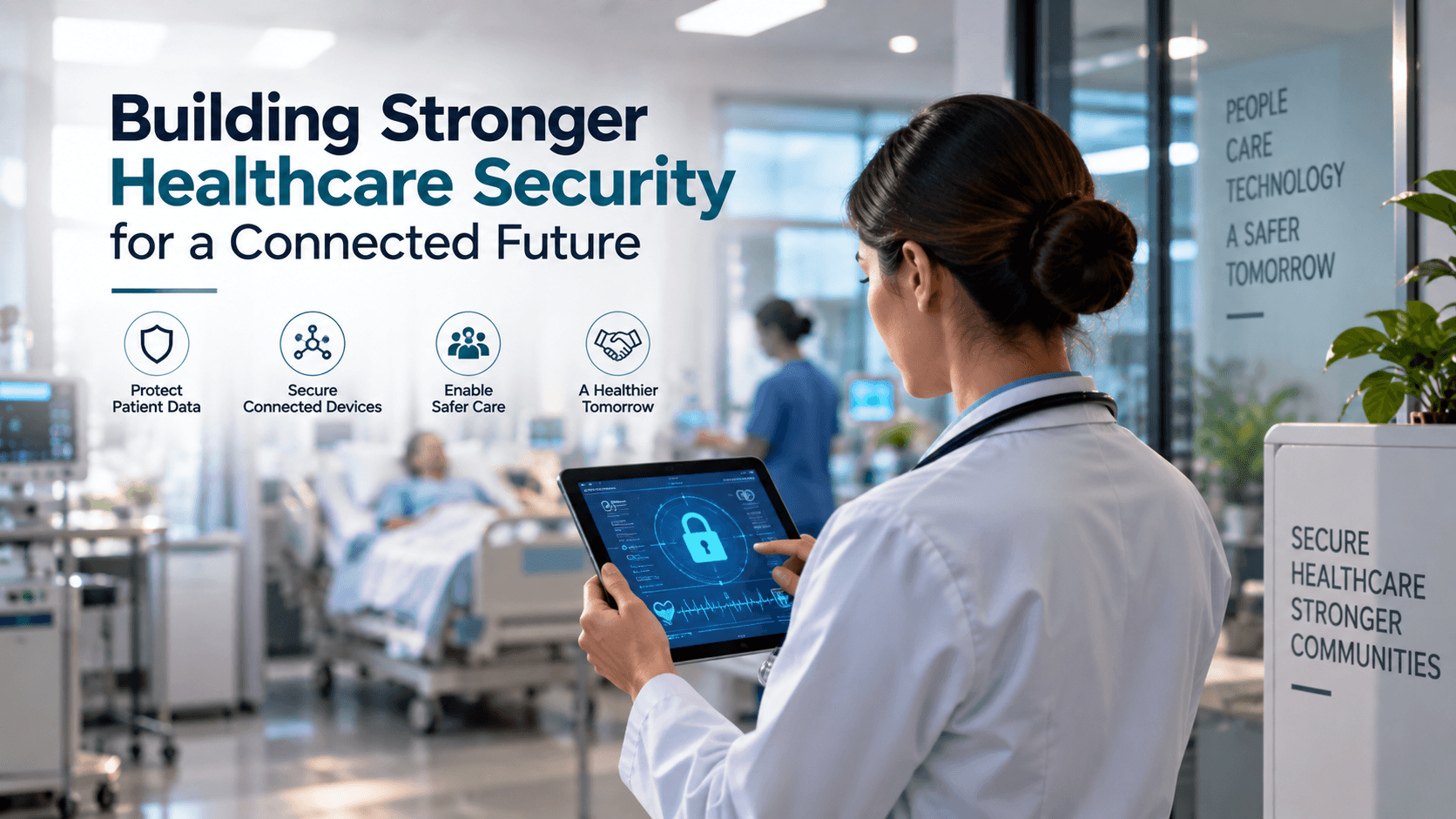
Healthcare organizations increasingly depend on connected systems to deliver timely, efficient care. Electronic health records, diagnostic equipment, access-control systems, cloud platforms, and connected medical devices all improve operations, but they also create more points that need protection. Effective healthcare security solutions therefore need to address both physical and digital risks. Secureingress approaches this challenge by helping organizations consider security as an integrated part of healthcare infrastructure rather than as a collection of isolated measures.
Why Healthcare Security Requires a Layered Approach
A healthcare facility operates differently from a conventional commercial building. Patients, visitors, clinicians, administrators, contractors, and emergency personnel may all need access to different areas, often around the clock. At the same time, sensitive information and critical equipment must remain protected.
A layered strategy combines preventive, monitoring, and response measures. Depending on the facility, this can involve:
- Controlled entry and restricted access areas
- Video surveillance and monitoring
- Intrusion detection
- Network and endpoint protection
- Visitor management
- Emergency communication systems
- Secure handling of patient information
The objective is not to make every area inaccessible. Instead, security should allow authorized people to perform their responsibilities while reducing unnecessary exposure.
Protecting Digital Infrastructure From Growing Threats
The expansion of connected healthcare technology has made cybersecurity an operational priority. Hospitals and clinics may rely on networks connecting workstations, servers, medical devices, mobile devices, and third-party applications. A weakness in one area can potentially affect other connected systems.
Organizations evaluating cyber security solutions for healthcare should consider more than perimeter defenses. Strong protection can involve network segmentation, identity and access management, multifactor authentication, endpoint security, encryption, vulnerability management, and continuous monitoring.
Staff awareness is equally important. Employees interact with systems every day and may encounter phishing attempts, suspicious attachments, unauthorized access requests, or compromised credentials. Regular training and clearly defined procedures can reduce avoidable security incidents.
Connecting Physical and Digital Protection
Physical and digital security are increasingly interconnected. For example, access credentials may determine whether an employee can enter a restricted room, while system logs can help establish when access occurred. Surveillance footage can provide additional context during an investigation.
This convergence makes coordination important. Security teams should understand how different technologies interact and establish appropriate permissions for staff responsible for operating them.
When planning an integrated environment, organizations should consider:
| Security area | Primary consideration | Useful outcome |
| Access control | Who can enter specific areas | Limits unauthorized physical access |
| Surveillance | Where monitoring is necessary | Supports detection and investigation |
| Network security | How systems communicate | Reduces exposure between connected systems |
| Data protection | How sensitive information is stored and shared | Helps preserve confidentiality |
| Incident response | How teams react to events | Improves coordination during disruptions |
Keeping Sensitive Healthcare Data Secure
Patient information requires careful handling because healthcare records can contain highly sensitive personal and clinical details. Protection should extend throughout the information lifecycle, from collection and storage to transmission, access, retention, and disposal.
Organizations considering healthcare data security solutions should establish clear rules around authorization and information access. Not every employee needs access to every record. Role-based permissions can help limit unnecessary exposure, while encryption and secure authentication can provide additional safeguards.
Regular reviews are also valuable. Access privileges should be updated when employees change roles or leave the organization. Systems should be monitored for unusual activity, and procedures should exist for responding to suspected breaches.
Choosing Security Measures That Fit the Facility
There is no universal security configuration for every healthcare environment. A small clinic, diagnostic center, specialty hospital, and large medical campus can have very different operational requirements.
Before investing in technology, decision-makers should assess:
- The facility’s physical layout and critical areas
- Types of information and equipment requiring protection
- Existing technology and integration requirements
- Staff responsibilities and access levels
- Regulatory and organizational obligations
- Maintenance, monitoring, and future scalability
A risk assessment can help prioritize investments instead of adding technology without a clear purpose. Compatibility is also important because disconnected systems can create unnecessary administrative complexity.
FAQs
Why is healthcare security different from general commercial security?
Healthcare facilities combine sensitive information, vulnerable patients, critical equipment, and continuous operations. Their security strategy therefore needs to address physical access, information protection, and operational continuity together.
Can physical security support cybersecurity?
Yes. Controlled access to server rooms, network equipment, and restricted workspaces can reduce opportunities for unauthorized physical interference with digital infrastructure.
How can healthcare organizations reduce insider risks?
Role-based access, strong authentication, employee training, activity monitoring, and timely removal of access rights can help reduce unnecessary exposure.
Should security systems be reviewed after a facility expansion?
Yes. Construction, new equipment, additional departments, and changes in workflows can introduce new vulnerabilities or alter existing access requirements.
What should organizations prioritize when upgrading security?
Start with a risk assessment. Identify critical assets, likely threats, existing weaknesses, and operational priorities before selecting technologies or services.
Conclusion
Healthcare security works best when physical protection, cybersecurity, data safeguards, and response procedures are considered together. Organizations should assess their specific risks, limit access appropriately, monitor critical environments, and regularly review their security controls as technology and operations change. When evaluating elv companies in india, healthcare organizations should look beyond individual products and consider integration, reliability, scalability, maintenance, and the ability to support a coordinated security strategy. The strongest approach is one that protects people and information without disrupting the care that patients depend on.
No comment