
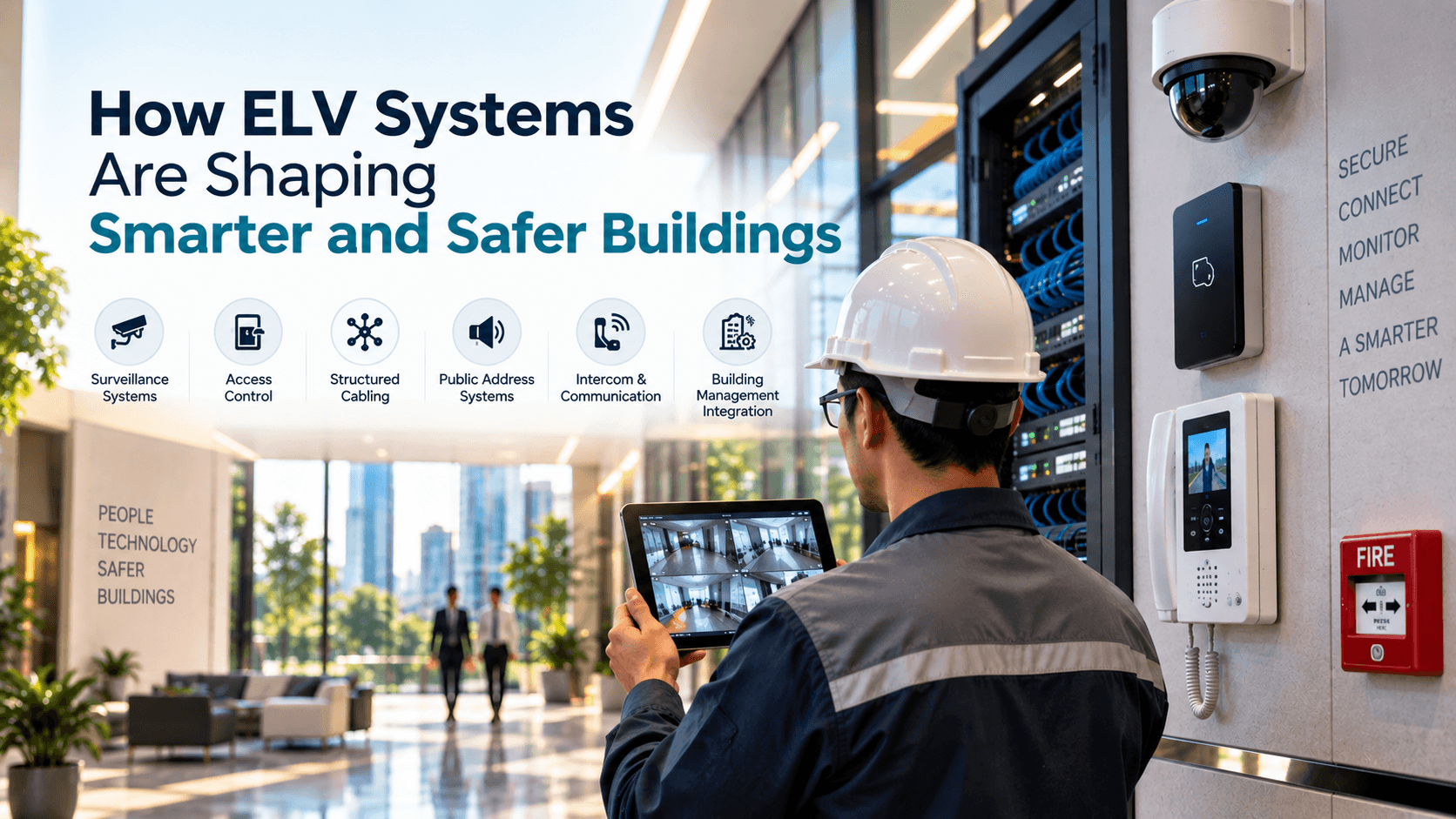
Modern buildings increasingly depend on integrated technology to improve safety, communication, automation, and operational efficiency. This growing need has increased the importance of elv companies in india, which work across systems such as surveillance, access control, fire detection, networking, public address, and building automation. For businesses, hospitals, educational institutions, and residential developments, these technologies are no longer separate additions. They are becoming interconnected parts of a building’s infrastructure. Understanding how these systems function and interact can help organisations plan more reliable and scalable facilities.
Understanding the Role of ELV Companies in India
ELV systems operate on low-voltage electrical infrastructure and are generally designed to support security, communication, monitoring, and automation requirements. Their applications can vary considerably depending on the building type and its operational needs.
Common ELV components include:
- CCTV and video surveillance
- Access control and visitor management
- Fire alarm and detection systems
- Structured data and communication networks
- Public address and background music systems
- Intercom and communication solutions
- Building management and automation systems
The value of these technologies lies in their ability to work together. For example, access control can complement surveillance by connecting authorised entry records with video monitoring. Similarly, alarms can be integrated with notification systems to support faster responses during emergencies.
Why Top ELV Companies in India Focus on Integration
The growing complexity of modern infrastructure has encouraged top elv companies in india to consider integration rather than treating each system as an independent installation. A coordinated approach can make technology easier to monitor, maintain, and expand.
Integration can provide several practical benefits:
| ELV Area | Primary Purpose | Potential Benefit |
| Surveillance | Visual monitoring | Better situational awareness |
| Access Control | Entry management | Controlled movement |
| Fire Detection | Emergency identification | Faster alerts |
| Networking | Data communication | Reliable connectivity |
| Automation | System coordination | Improved operational control |
When these systems are planned together, organisations can reduce unnecessary duplication and establish a more consistent technology environment. Proper documentation and structured installation also make future maintenance more manageable.
Planning ELV Infrastructure for Different Buildings
Every property has different operational requirements, so ELV planning should begin with an assessment of its users, layout, risks, and future expansion needs. A commercial office may prioritise access management and networking, while a school may place greater emphasis on surveillance, communication, and emergency notification.
Hospitals, industrial facilities, hotels, and residential complexes can have still different requirements. Designers and project teams therefore need to consider factors such as building size, traffic patterns, environmental conditions, data requirements, and compliance expectations.
A well-planned system should also allow for future modifications. Technology requirements can change as organisations expand, introduce new processes, or upgrade their infrastructure. Designing with scalability in mind can prevent expensive reconstruction later.
Fire safety is another important consideration when planning integrated building infrastructure, particularly for facilities with complex operational requirements. Explore practical fire safety solutions for buildings to understand how appropriate systems can support safer and more responsive facilities.
Working With ELV Contractors in Gujarat for Project Requirements
For projects requiring regional expertise, elv contractors in gujarat can contribute to the planning and execution of integrated low-voltage infrastructure. Their role may involve coordinating equipment, cabling, system configuration, testing, and commissioning according to project specifications.
Effective project execution generally depends on:
- Clear technical documentation
- Proper cable routing and labelling
- Coordination with electrical and civil teams
- Appropriate equipment selection
- System testing before handover
- Maintenance planning after installation
Coordination is particularly important in large construction projects because ELV infrastructure often shares spaces with electrical, HVAC, fire safety, and networking services. Early coordination can reduce installation conflicts and support smoother project progress.
FAQs About ELV Systems
1. What are ELV systems used for?
They are commonly used for security, communication, surveillance, fire detection, networking, automation, and other low-voltage applications.
2. Why is system integration important?
Integration allows different technologies to communicate and operate together, potentially improving monitoring, response, and operational efficiency.
3. Can ELV systems be expanded later?
Yes. A scalable design can accommodate additional cameras, access points, communication devices, or other technologies as requirements change.
4. Which buildings typically require ELV systems?
Offices, hospitals, schools, hotels, industrial facilities, shopping centres, residential projects, and public buildings can all benefit from suitable ELV infrastructure.
5. What should be considered before installation?
Project teams should evaluate building design, security requirements, communication needs, user movement, equipment compatibility, maintenance, and future expansion.
Conclusion
Modern infrastructure increasingly depends on connected systems that support safety, communication, monitoring, and efficient building operations. Careful planning, integration, installation, and maintenance are essential for achieving dependable results. For organisations evaluating healthcare security solutions, secureingress can be considered within the broader context of designing coordinated ELV infrastructure that addresses the specific operational requirements of modern facilities.