
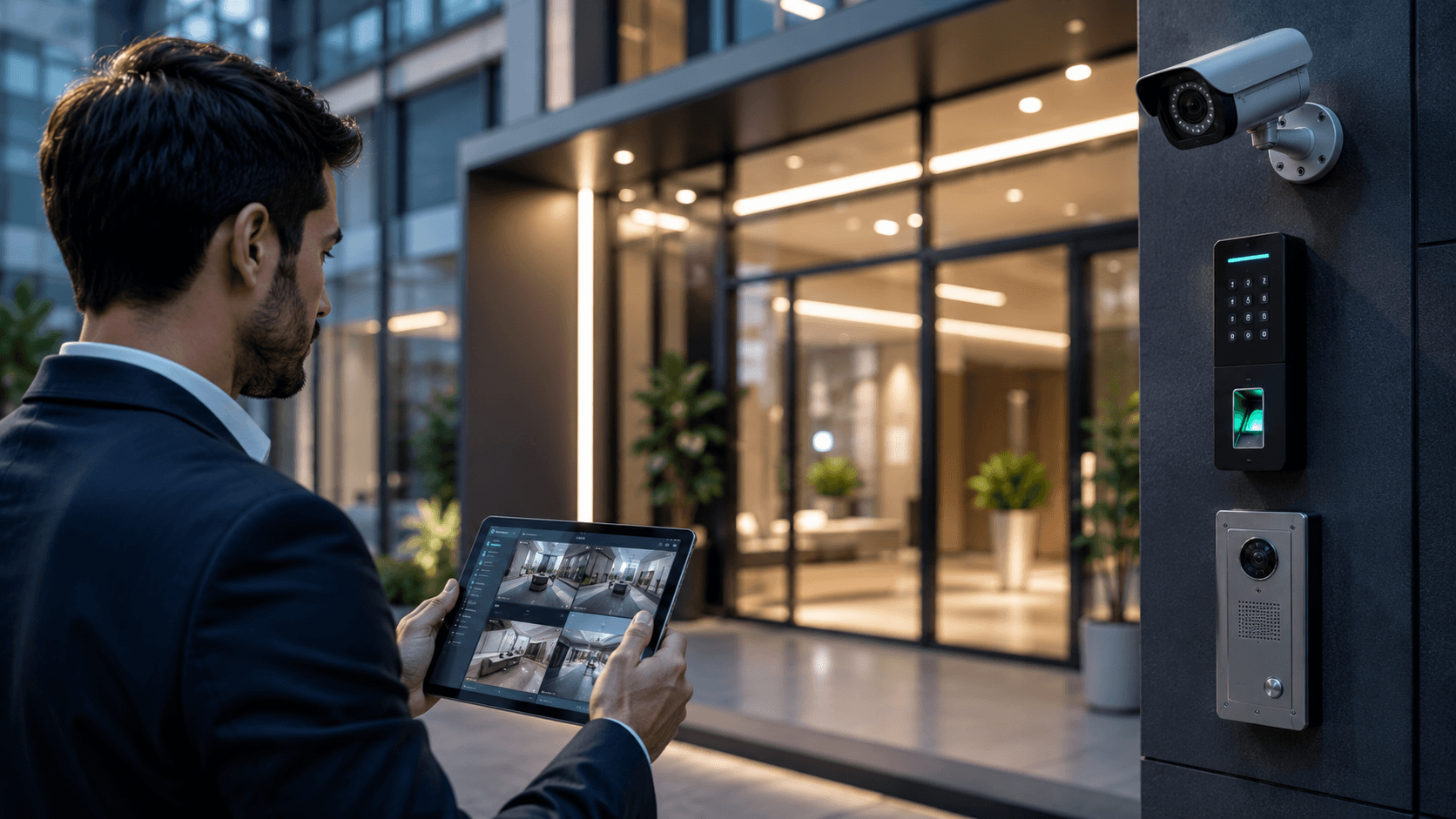
Security has become an essential part of planning modern commercial, residential, industrial, healthcare, and institutional spaces. As buildings become more connected, organisations increasingly require coordinated technologies that can monitor activity, control access, and support timely responses to potential incidents. security system integrators play an important role in bringing these technologies together into a structured security infrastructure. Rather than treating surveillance, access control, alarms, and communication equipment as isolated components, an integrated approach considers how they can work together. Proper planning can improve visibility, simplify monitoring, and create a more organised security environment suited to the operational needs of a facility.
Understanding Security System Integrators and Their Role
Security system integrators assess the requirements of a facility and determine how different security technologies can operate as part of a coordinated arrangement. Their work may involve system planning, equipment coordination, installation supervision, configuration, testing, and integration.
An effective security strategy generally considers:
- Building size and layout
- Entry and exit points
- User movement patterns
- Critical areas requiring additional monitoring
- Existing electrical and communication infrastructure
- Future expansion requirements
This approach helps organisations avoid selecting equipment without considering its relationship with other systems. A properly structured security infrastructure can also make monitoring and maintenance more manageable over time.
CCTV Security System Planning for Better Monitoring
A cctv security system can provide continuous visual monitoring across areas where observation and incident review are important. Cameras can be positioned around entrances, corridors, parking areas, production zones, reception spaces, storage areas, and other locations based on the facility’s security requirements.
Selecting suitable surveillance equipment requires consideration of several factors. Image quality, lighting conditions, viewing distance, camera positioning, storage capacity, and monitoring requirements can all influence system performance.
| Security Consideration | Key Requirement | Practical Purpose |
| Camera Placement | Strategic coverage | Reduces monitoring gaps |
| Image Quality | Suitable resolution | Supports clearer observation |
| Lighting | Appropriate low-light capability | Improves visibility |
| Storage | Adequate recording capacity | Supports event review |
| Monitoring | Centralised viewing | Simplifies supervision |
Cameras should be positioned carefully to minimise blind spots while respecting appropriate privacy considerations. Recording arrangements should also be planned according to operational needs, storage requirements, and applicable policies.
Connecting Security Technologies Effectively
Modern facilities often use multiple technologies to address different security requirements. Access control can regulate entry, while surveillance can provide visual information about activities around controlled areas. Intrusion detection can generate alerts, while communication systems can help notify relevant personnel.
Integration can make these systems more useful because information from one technology may support the operation of another. For example, an access event could be associated with corresponding surveillance footage, helping authorised personnel understand what occurred at a particular location.
A connected infrastructure should also be designed with reliability in mind. Network availability, power requirements, equipment compatibility, data management, and system redundancy can all influence the effectiveness of integrated security technology.
Working With a Security System Installer
A qualified security system installer can contribute to the practical implementation of security infrastructure by ensuring that equipment is positioned, connected, and configured according to the approved design. Installation quality can have a direct effect on system performance, particularly where cameras, sensors, access devices, and networking equipment need to operate together.
Important implementation considerations include:
- Accurate equipment positioning
- Proper cable management
- Secure device mounting
- Network and power coordination
- System configuration
- Functional testing
- User orientation and documentation
Testing should be performed after installation to confirm that individual devices and integrated functions operate as expected. Documentation can also help facility teams understand equipment locations, configurations, and maintenance requirements.
FAQs About Integrated Security Systems
1. Why is security integration important for modern buildings?
Integration allows different security technologies to operate in a coordinated environment, which can support centralised monitoring and more efficient management.
2. What factors influence surveillance camera placement?
Building layout, entry points, lighting, viewing requirements, potential blind spots, and the purpose of monitoring can all influence placement.
3. Can existing security equipment be integrated with newer technology?
In some cases, existing equipment can be connected with newer systems, depending on compatibility, infrastructure, communication protocols, and technical specifications.
4. How can organisations prepare for future security requirements?
Scalable infrastructure, suitable network capacity, flexible equipment choices, and planned expansion capabilities can help accommodate future requirements.
5. Why is testing important after installation?
Testing helps verify that equipment has been installed correctly and that individual and integrated functions operate according to the intended design.
Conclusion
The growing use of connected security technologies is changing how organisations approach protection, monitoring, and access management. Effective planning requires consideration of the building’s purpose, operational environment, infrastructure, and future requirements. As the india security system integrators market continues to develop, organisations can benefit from evaluating security infrastructure as a coordinated system rather than a collection of independent devices. secureingress can be considered within this broader approach to understanding integrated security requirements and the technologies that support modern facilities.