
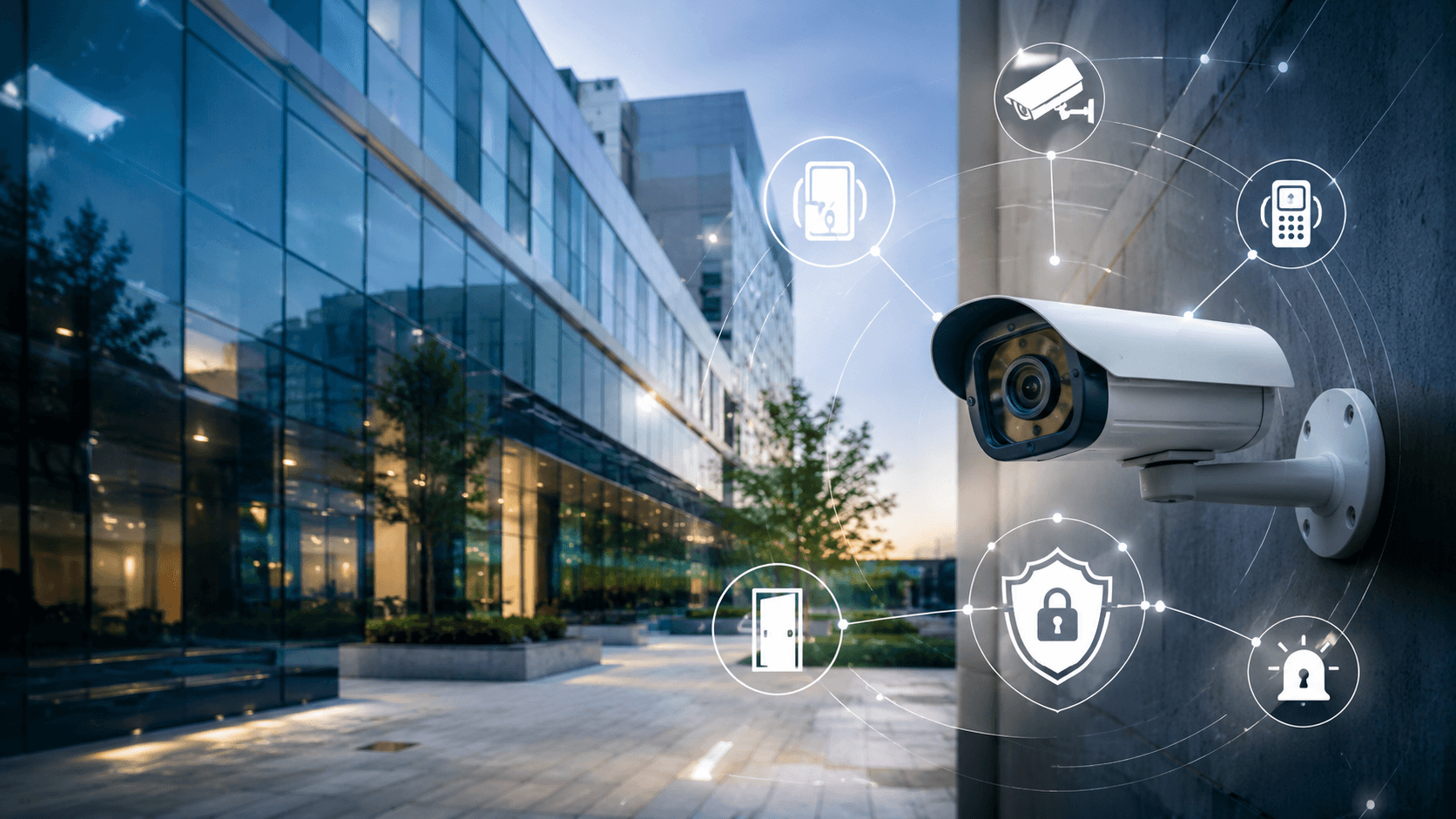
Commercial buildings today face increasing security challenges due to larger workforces, valuable assets, and growing operational complexity. Businesses, retail spaces, offices, healthcare facilities, and industrial properties require advanced systems that can manage safety, surveillance, and access control efficiently. Modern organizations now rely on integrated technologies that combine multiple security functions into a unified infrastructure. The rising demand for security system integrators reflects how businesses are prioritizing centralized and intelligent security management to improve operational safety and efficiency.
Why Integrated Security Systems Matter
Traditional security methods often relied on separate systems for surveillance, access control, and emergency management. Modern integrated solutions combine these functions into a coordinated network that improves monitoring and response capabilities.
Integrated security systems help commercial buildings by:
- Improving real time monitoring
- Enhancing emergency response coordination
- Reducing operational risks
- Centralizing security management
- Increasing workplace safety
By connecting surveillance cameras, alarm systems, access controls, and monitoring software, organizations can achieve better visibility and faster incident handling.
Integrated infrastructure also simplifies security administration by allowing operators to manage multiple systems from a single platform.
The Role of Commercial Security Technologies
Modern commercial security solutions are designed to support the complex operational needs of commercial properties. Businesses require technologies that can protect employees, visitors, equipment, and sensitive information without disrupting daily operations.
Why Businesses Work with Security System Integrators
Commercial buildings often require multiple technologies to operate together efficiently, including surveillance systems, access management, alarm monitoring, and centralized reporting tools.
Security system integrators help businesses connect these solutions into a coordinated infrastructure that supports operational visibility, improved monitoring, and long term scalability.
Working with integrated security environments can support:
- Centralized security administration
- Improved communication between systems
- Better operational efficiency
- Reduced infrastructure complexity
- Scalable deployment for future growth
Organizations increasingly prioritize integrated security planning to maintain reliability across modern commercial environments.
The following table highlights key components of integrated commercial security systems:
| Security Component | Operational Benefit |
| Surveillance monitoring | Improved threat visibility |
| Access control systems | Restricted unauthorized entry |
| Alarm integration | Faster emergency alerts |
| Centralized management software | Better operational control |
| Automated reporting tools | Improved incident analysis |
These technologies improve coordination between departments while supporting more effective building management and security oversight.
Commercial buildings also benefit from scalable systems that can adapt to future expansion and technological upgrades.
How Integrated Systems Improve Operational Efficiency
Integrated security infrastructure supports not only safety but also operational productivity. Automated systems reduce the need for manual monitoring and improve communication during emergencies or security incidents.
Benefits of integrated systems include:
- Faster incident response
- Reduced manual security processes
- Better coordination between departments
- Enhanced visitor management
- Improved compliance with safety standards
Organizations can also use integrated systems to generate reports, monitor activity patterns, and identify potential vulnerabilities more effectively.
This level of automation helps businesses maintain secure environments while improving day to day operational efficiency.
As commercial buildings become larger and more technologically advanced, integrated security solutions continue to play an increasingly important role in facility management.
The Importance of Professional Installation and Planning
Successful security integration requires careful planning and technical expertise. A qualified security system installer helps ensure that surveillance systems, alarms, access controls, and monitoring tools operate efficiently together.
Professional planning contributes to:
- Better system compatibility
- Reliable equipment performance
- Efficient infrastructure layout
- Improved maintenance support
- Long term operational stability
Proper installation also minimizes technical issues and ensures that security infrastructure aligns with building requirements and operational goals.
Commercial properties often require customized solutions based on occupancy levels, building layouts, and industry specific safety standards.
As security technologies continue to evolve, professional implementation remains essential for maximizing system performance and reliability.
Future Trends in Commercial Building Security
Security technologies are rapidly evolving with advancements in automation, artificial intelligence, and cloud based infrastructure. Commercial buildings increasingly require systems capable of handling modern operational and security challenges.
Current trends influencing integrated security systems include:
- AI driven surveillance analytics
- Remote monitoring capabilities
- Smart access management systems
- Cloud based security platforms
- Automated emergency response integration
Businesses are also prioritizing proactive threat detection rather than relying solely on reactive monitoring methods.
Modern integrated systems provide organizations with greater flexibility, scalability, and operational insight while supporting long term infrastructure efficiency.
As commercial environments become more connected, intelligent security systems are expected to become a standard requirement across industries.
FAQs
What are integrated security solutions?
Integrated security solutions combine surveillance, access control, alarms, and monitoring systems into one centralized platform.
Why are integrated systems important for commercial buildings?
They improve safety, operational efficiency, and coordination during emergencies or security incidents.
How do commercial security systems improve workplace safety?
They provide real time monitoring, controlled access, and faster emergency response capabilities.
Why is professional installation necessary for security systems?
Professional installation ensures proper system integration, reliability, and long term operational efficiency.
Why do businesses choose security system integrators?
Businesses choose integrated security solutions to simplify management, improve monitoring capabilities, and create more scalable security environments across commercial facilities.
Conclusion
Integrated security solutions continue to play a vital role in protecting commercial buildings by improving monitoring efficiency, operational control, and emergency response capabilities. Modern organizations increasingly rely on centralized systems that combine surveillance, access management, and automated monitoring technologies into unified security frameworks. The growing importance of a reliable cctv security system highlights the need for advanced infrastructure capable of supporting modern commercial operations. Companies like Security Ingress contribute to this evolving security landscape by supporting integrated technologies aligned with current commercial safety and operational requirements.